Play the tutorial
Strategy games often have unique systems. The tutorial is usually the quickest way to learn them.
Strategy games reward planning, patience and learning from mistakes. This guide explains the core ideas and the habits that help new players feel at home in the genre.
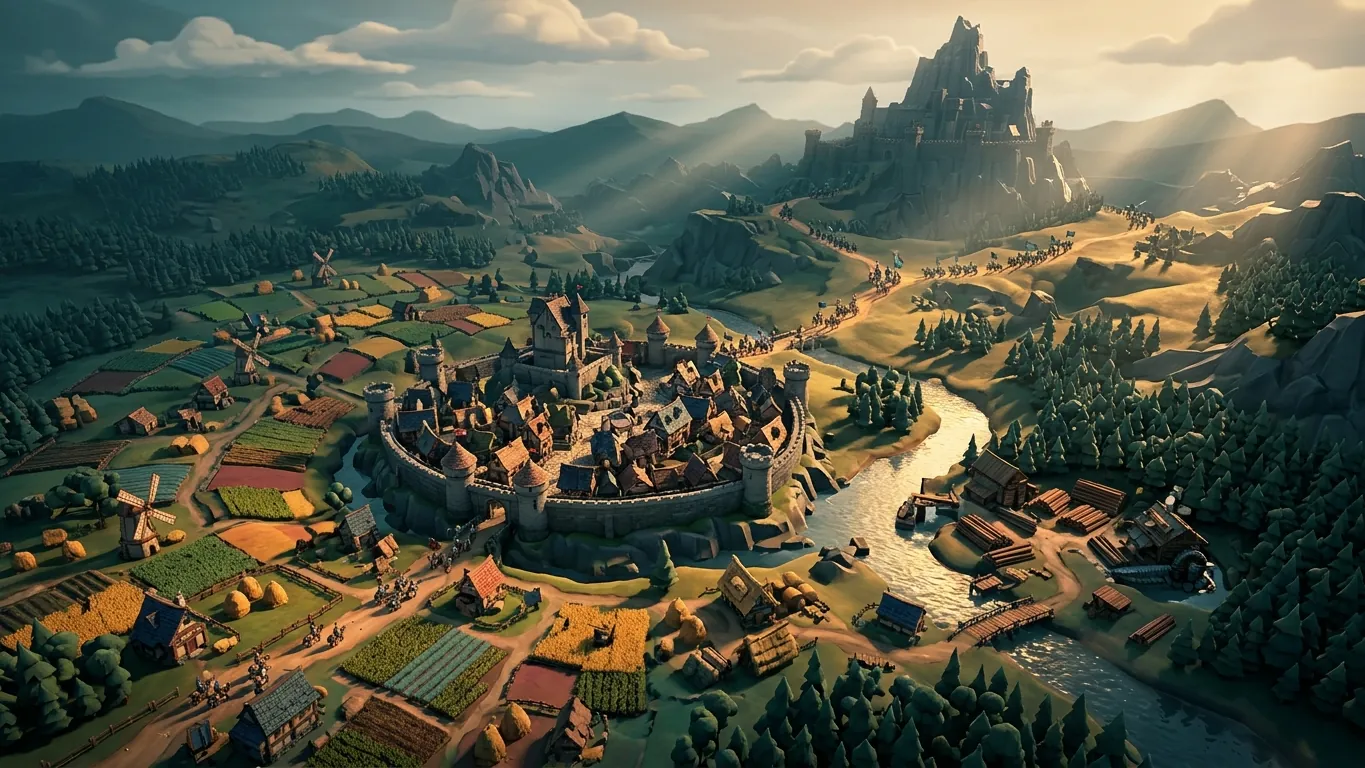
At their heart, strategy games are about decisions. Instead of controlling a single hero, you usually manage resources, buildings and groups of units, and you win by making better choices than your opponent over time.
There are two broad styles. Turn-based strategy games let you take as long as you like to plan each move before passing control to the other side. They feel a bit like a board game and are often a gentle entry point. Real-time strategy games keep the clock running, so you must make decisions quickly while the situation changes around you.
Within these styles you will find many variations: grand campaigns spanning centuries, small tactical battles with a handful of soldiers, city builders with light combat, and everything in between.
New players often focus on building the strongest army as quickly as possible. In most strategy games, however, armies depend on a steady supply of resources, such as food, wood, metal, energy or gold. A strong economy lets you replace losses and adapt to surprises, while a weak one leaves you with nowhere to go after a single defeat.
In practice, this means keeping your workers busy, expanding to new resource sites when it is safe, and avoiding piles of unspent resources. Unused resources are effectively wasted, because they could be working for you. Learning to balance growth and defense is one of the most important skills in the genre.
These habits apply to most strategy games, whatever their setting.
Strategy games often have unique systems. The tutorial is usually the quickest way to learn them.
Knowing what your opponent is doing lets you respond instead of guessing.
Many games let you pause or slow time. There is no shame in using these options while you learn.
Pick one goal for the early game, such as expanding or defending, and stick with it.
Losing is part of the genre. Experienced strategy players lose often too, and they treat each defeat as information. After a loss, ask yourself a few simple questions. Did you run out of resources? Were you surprised by an attack you did not see coming? Did you spread your forces too thin?
Some games offer replays or summary screens that show how the match unfolded. Even a quick look can reveal patterns, such as building too few workers or expanding too late. Fix one thing at a time rather than trying to change everything at once.
If you enjoy thinking things through at your own pace, a turn-based game is a comfortable place to begin. If you like quick decisions and some pressure, try a real-time game against computer opponents on an easy setting before facing other players online.
Look for games with a solid tutorial, adjustable difficulty and a single-player campaign that introduces mechanics gradually. Above all, choose a setting that appeals to you, whether that is ancient empires, distant planets or a modern city. Interest in the world will keep you coming back while the skills develop.
 Easy, normal or hard: pick the level that fits you
Easy, normal or hard? An opinion piece on what difficulty settings really change and why choosing the level that suits you is a smart decision.
Read more
 Keeping friendships going through co-op games
Tips for playing co-op games with friends as an adult: choosing the right games, organizing a regular game night and keeping voice chat friendly.
Read more
 How to tame a growing pile of unplayed games
Too many unplayed games? A practical guide to sorting your backlog by mood, finishing what matters to you and letting go of the rest without guilt.
Read more